
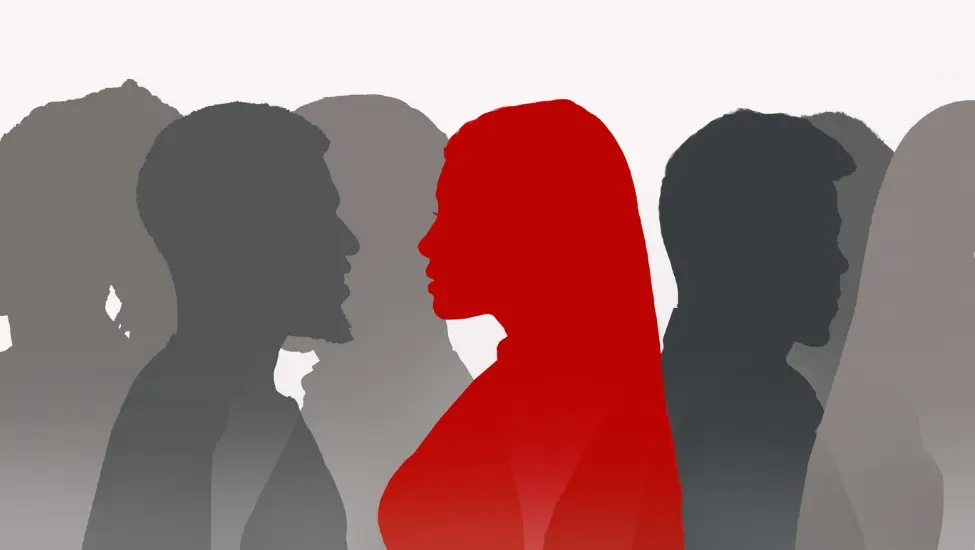
Whenever accessibility, inclusion, equality or discrimination are discussed, someone inevitably asks the same question.
"But how many people does this affect?"
It's the wrong question.
It doesn't matter whether the answer is one person, one hundred people or one hundred million people. Rights are not decided by opinion polls. Equality isn't something that only applies once a problem reaches a statistically significant threshold.
The Tyranny of the Majority
Imagine if we applied the same logic elsewhere.
- "Only a small percentage of people live in rural communities, so why bother maintaining those roads?"
- "Only a tiny proportion of the population has a rare disease, so let's not bother researching treatments."
- "Only a handful of children need a specialist teacher, so it's not worth employing one."
We instinctively know those arguments are wrong because they reduce people to numbers on a spreadsheet.
Yet somehow, when the conversation turns to accessibility or inclusion, people suddenly become amateur statisticians.
- "Is it really worth it?"
- "How many users actually need that?"
- "What's the return on investment?"
As if someone's ability to participate should depend on whether enough other people happen to share the same barrier.
One Person Is Enough
If your website can't be used by someone relying on a screen reader, it doesn't matter whether that's one visitor a year or one thousand. You've excluded someone.
If your venue has steps but no ramp, it doesn't matter whether only one wheelchair user wants to attend. That one person has still been told they aren't welcome.
If your recruitment process unintentionally discriminates against one qualified candidate, the injustice doesn't become acceptable because everyone else managed just fine.
We don't judge discrimination by volume. We judge it by principle.
Equality, discrimination, inclusion and accessibility exist to protect individuals. They are not rights and protections handed out once enough people are affected.
The Percentage Trap
I often hear developers justify skipping accessibility improvements because "less than 2% of users" might benefit.
Let's ignore for a moment that they usually have no evidence for that figure.
Even if they did, why does the percentage matter?
Would you refuse to fix a security flaw because only 2% of users might be hacked?
Would you ignore a data corruption bug because only 1% of customers might lose their work?
Of course not.
We don't make those decisions based on percentages. We make them because they're the right thing to do.
Accessibility deserves exactly the same mindset.
Better For Everyone
One of the great ironies is that the things introduced for a minority almost always end up benefiting everyone.
Captions help people watching videos in noisy environments.
Ramps help parents with pushchairs and travellers with suitcases.
Clear language helps people reading in a second language.
Keyboard navigation helps power users.
High colour contrast helps anyone trying to use a phone in bright sunlight.
History is full of examples where designing for those facing barriers made life easier for everybody else as well.
Events Reveal Our Priorities
Conferences and events are where these principles are put to the test.
When you're organising an event, do you automatically cater for different dietary requirements, or do you wait for people to ask? If you only provide vegetarian, vegan, gluten-free or allergy-aware options after someone has requested them, you've already made those attendees feel like an afterthought.
The same applies to every other aspect of inclusion.
When choosing a venue, do you think about how people will get there? Is it accessible by public transport? Is there suitable parking? Can someone who doesn't drive, or can't drive, realistically attend?
What about the building itself? It's not enough to tick a box because there's a wheelchair ramp to the front door. Can a wheelchair user actually get into the conference hall? Can they reach the stage if they're speaking? Can they access the toilets? Can they join everyone else for lunch, networking and the evening social events?
Too often accessibility is treated as a single checkbox instead of a complete experience. A venue that gets someone through the front door but leaves them unable to participate fully isn't accessible. It's merely less inaccessible.
The best event organisers don't wait to be asked. They assume that people will have different needs because that's simply the reality of being human. They plan for those needs from the outset, not because they know exactly who will attend, but because everyone deserves the opportunity to do so.
We Thought About You Before We Knew You
Perhaps that's what inclusion really comes down to.
It's saying to every person who might one day cross your path, "We thought about you before we even knew you were coming."
- We didn't know if someone would need a gluten-free meal, but we made sure one was available.
- We didn't know if someone would rely on public transport, so we chose a venue that wasn't impossible to reach without a car.
- We didn't know if someone would use a wheelchair, but we made sure they could get everywhere everyone else could, not just through the front door.
- We didn't know if someone would have a hearing impairment, a visual impairment, an invisible disability or simply a different way of experiencing the world. So we planned for that too.
None of those decisions were made because we knew someone would need them. They were made because someone might.
That's the difference between reacting to requests and designing for inclusion. One says, "Tell us what you need and we'll see what we can do." The other says, "We've already thought about it because we believe everyone should be able to take part."
Nobody should have to ask for permission to belong.
It only takes one person to discover that nobody thought about them.
It also only takes one thoughtful decision to ensure they never have to.
I Am Not a Number
Whenever someone asks, "How many people does this affect?" ,they've already stopped seeing people.
- I'm not a statistic.
- I'm not a percentage.
- I'm not an edge case.
I'm a person. Just like you.
You shouldn't have to count how many people like me exist before deciding whether I'm welcome.
You shouldn't have to calculate whether I'm worth including.
- I am not one percent.
- I am not 0.1%.
- I am not "only a handful of users."
I am me. And you are you.
That's all that should matter.
Don't count me.
Welcome me.

 Congratulations, you discovered a hidden secret!