
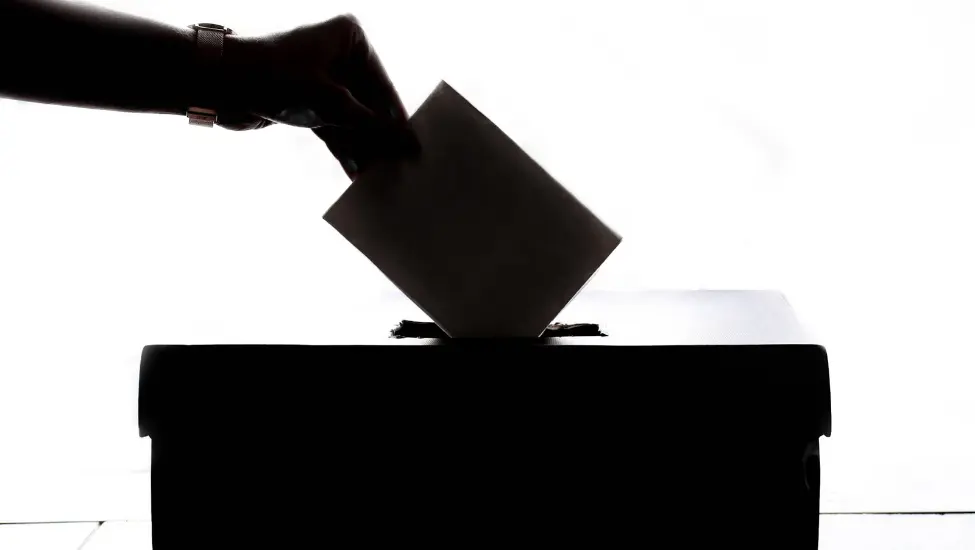
After careful consideration, several cups of tea, and absolutely no pressure whatsoever from anyone, I have decided to stand in the forthcoming by-election in Clacton to become a Member of Parliament.
No, really.
Well... perhaps not.
For anyone outside the UK wondering how on earth this could even be possible, British democracy is wonderfully accessible.
To stand for Parliament, you don't need to belong to a major political party. In fact, you don't need to belong to any political party. As long as you meet the legal requirements; being at least 18 years old, a British, Irish or qualifying Commonwealth citizen, and not otherwise disqualified; you can put yourself forward as a candidate.
Normally, if you wanted your campaign name to appear on the ballot paper, you would register a political party. Unfortunately, by the time this by-election was announced, it was far too late to create and register one. That means I'll have to stand as an Independent.
Fortunately, British democracy offers another perfectly legal option.
The ballot paper displays the candidate's name.
So I simply changed mine.
From today, I shall therefore be known as:
Brian "OpenSourceSoftware" Teeman
Problem solved.
Well, assuming the Returning Officer has a sense of humour.
You don't even have to pay an entry fee.
Instead, you lodge a £500 deposit. If you receive at least 5% of the votes cast, you get the deposit back. Fail to reach 5%, and the deposit is forfeited.
For many candidates, especially independents and campaigners, that's a price worth paying.
Because here's the clever bit.
British elections generate an astonishing amount of publicity, especially by-elections, where there's only one result to report that night.
Once nominations close, every legitimate candidate becomes part of the election. Local media publish lists of everyone standing, election guides introduce the candidates, and broadcasters must ensure that election coverage is duly impartial. That doesn't mean every candidate gets identical airtime, but it does mean you suddenly become part of the conversation in a way that would normally cost far more than a £500 deposit.
And then there's election night.
When the votes have been counted, every candidate stands on the stage while the Returning Officer announces the result. If the declaration is televised which as a by-election this certainly will be then millions of viewers will see every candidate, whether they're representing a major political party, a local campaign, or simply themselves.
It's one of the reasons the UK has such a rich tradition of novelty candidates. The Official Monster Raving Loony Party, Count Binface, and countless independent campaigners have all used elections to shine a spotlight on issues, entertain the public, or simply remind everyone that democracy belongs to more than just the established parties.
Which brings me back to my exciting announcement.
Imagine the Returning Officer solemnly reading out:
"Brian OpenSourceSoftware Teeman..."
It's free advertising every time my name appears.
Perhaps I should go one step further and legally become:
Brian "Use Joomla" OpenSourceSoftware Teeman
So, despite today's announcement, I'm afraid I won't actually be contesting the Clacton by-election.
My name remains stubbornly unchanged.
But it does illustrate one of the more delightful quirks of British democracy: almost anyone can stand for Parliament, even if they have absolutely no expectation of winning.
Sometimes, just getting your name on the ballot paper and on the television screen beside everyone else's is victory enough.


 Congratulations, you discovered a hidden secret!