
Brian's writings in the category Joomla

There is a little box in Joomla wherever you add an image that says “Image Description (Alt Text)”. You put some words in it, save your article and congratulate yourself because you have now made your website accessible.
Except you haven't.
Well, perhaps you have. But there is a good chance that what you have actually done is label the image rather than describe it. And those two things are not the same.
Don't use a canonical tag to tell Google which of your mistakes it should ignore. Fix the mistake.
That might sound deliberately provocative, but it is the argument behind this entire article. If you genuinely have multiple URLs pointing to the same content, your first question shouldn't be “Which canonical tag should I use?” It should be “Why do I have multiple URLs pointing to the same content?”

I wanted a simple way to display a thumbnail image that visitors could click to see the full-size image.
Nothing complicated. No gallery extension. No lightbox library. And, most importantly, no JavaScript.
It turns out that modern HTML can do most of the work for us using the popover attribute.

There is a famous advertising slogan in the UK: A dog is for life, not just for Christmas.
A puppy might make a wonderful Christmas present, but it isn't really a Christmas present. It is a responsibility that lasts for many years. The excitement of Christmas morning is temporary; feeding it, walking it, looking after it and paying the vet bills are rather more permanent.
Exactly the same thing could be said about websites.
A website is for life, not just for launch day.

If you use Laragon for local web development, you have probably encountered this.
You create a new folder inside one of your projects. You haven’t created an index.php yet because, well, you’re still working on it. You open the folder in your browser and Apache helpfully presents you with a directory listing.
Technically, there is nothing wrong with it. Apache is doing exactly what it has been configured to do. But let’s be honest. It looks like 1998.

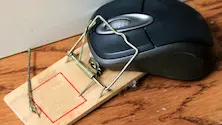
As the day progresses, my physical ability to use a mouse decreases. The mouse itself is perfectly fine, of course; it is still sitting there on my desk, working exactly as it should, but using it becomes increasingly uncomfortable for me.
As a result, I gradually find myself relying more and more on my keyboard to browse the web, with the occasional use of a touchscreen when that is more convenient.
And something interesting happens. For the majority of the time, it really isn't a problem until it suddenly is.
If you want to develop or test Joomla using PostgreSQL instead of MySQL or MariaDB, and you're using Laragon as your local development environment, the good news is that it is remarkably easy to set up.
Laragon can install and manage PostgreSQL alongside the other services in your local development environment, so there is no need to create a separate PostgreSQL setup.

When you're developing a website, it's always best to make your local development environment match the live server as closely as possible. That includes using the same versions of PHP, the web server and, importantly, the same database server.
As my host (ScalaHosting) uses MariaDB 11.8 it makes sense for me to use the same database server in my local dev envionment.
If you're using Laragon for local development, I've written before about why I think it's such a good development environment and how to make Laragon pretend to be a real domain. I also eventually added a missing feature to Laragon because apparently I wasn't content with leaving well enough alone.
In this tutorial I give you step-by-step instructions on using MariaDB with Laragon.

Twenty-one years ago, Joomla was born.
At the time, none of us knew what the future would hold. We had an idea, a belief that there was a better way to build software for the web, and a determination to create something that would give people the freedom to publish, share and build online.
What we could not have imagined was the journey that would follow.



 Congratulations, you discovered a hidden secret!